A dark hallway is not just a design problem. In a small rental, the path from bed to bathroom, kitchen, entry door, or child’s room often crosses rugs, shoes, pet bowls, laundry, and awkward corners. A good night-light layout makes the route understandable while staying lease-safe and fire-safe. This June 2026 guide focuses on no-drill placement, cord control, low glare, and a clear emergency path rather than decorative lighting alone.
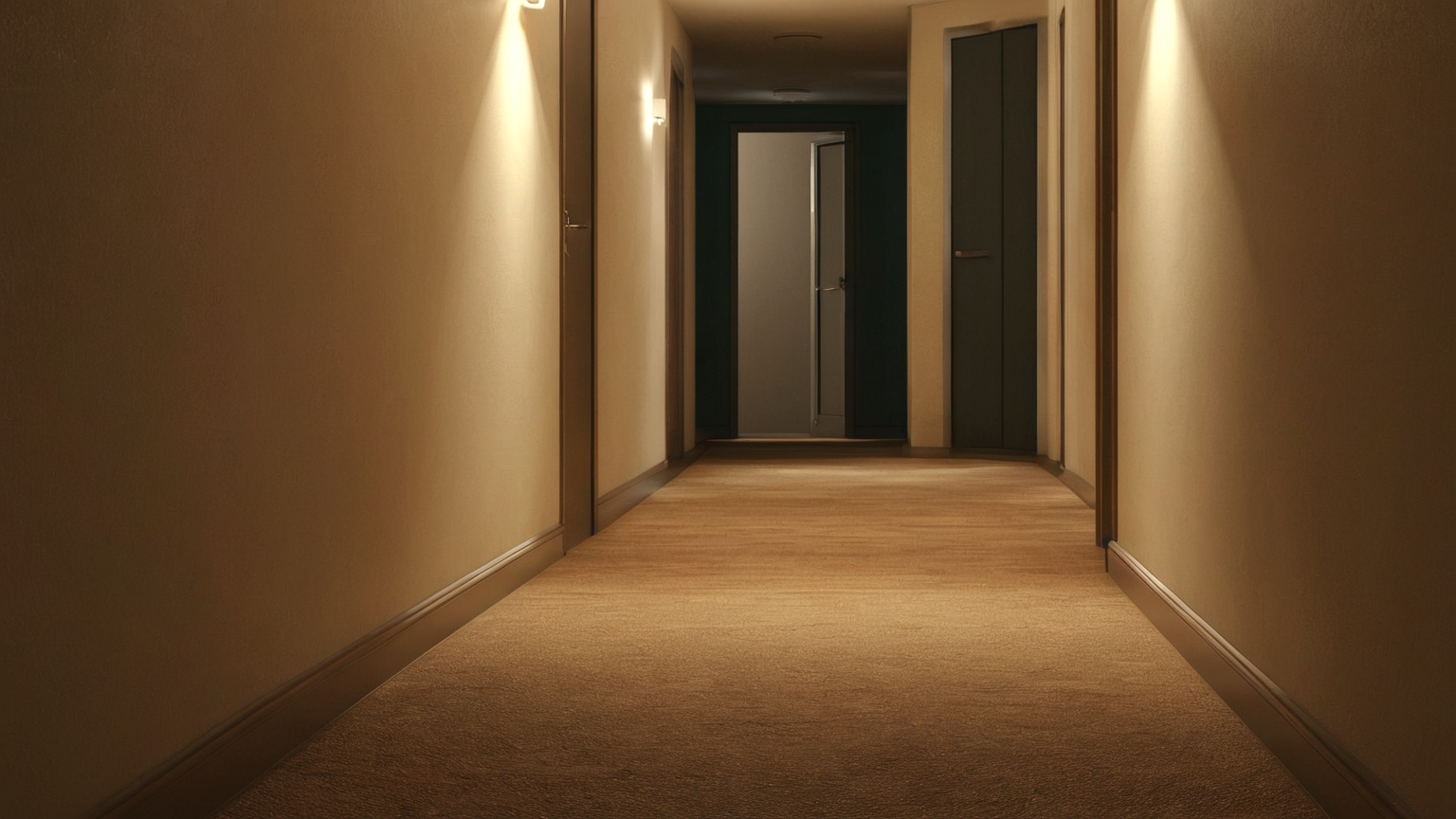
Layout decision table
| Problem | Better rental-friendly fix | Avoid | Check at night |
|---|---|---|---|
| Dark turn | Low warm light near the corner | Bright eye-level glare | Walk with sleepy eyes |
| Rug edge | Secure or remove the rug | Thick loose mat | Foot does not catch |
| Outlet far away | Rechargeable light or furniture move | Cord across the floor | No cord crosses the path |
| Emergency exit | One clear line to the door | Storage in hallway | Door opens fully |
| Shared apartment | Motion light with narrow aim | Light into bedroom faces | Roommate can sleep |
Map the real nighttime path
Do not design from a daytime photo. Start in the bed, turn off the main lights, and walk the route slowly. Notice where your hand searches for a wall, where a rug edge lifts, where a shoe pile narrows the path, and where a door swing creates a blind corner. Mark those spots with removable tape during the test, then remove the tape after deciding the layout.
Choose low, warm, and shielded light
The goal is orientation, not daytime brightness. A low warm light near the floor or lower wall usually reveals edges better than a bright white lamp at eye level. If a motion sensor turns on, it should fade or shut off quickly enough that it does not wake everyone. If it shines into a bedroom, rotate it, move it lower, or choose a dimmer model.

Cord and outlet rules for renters
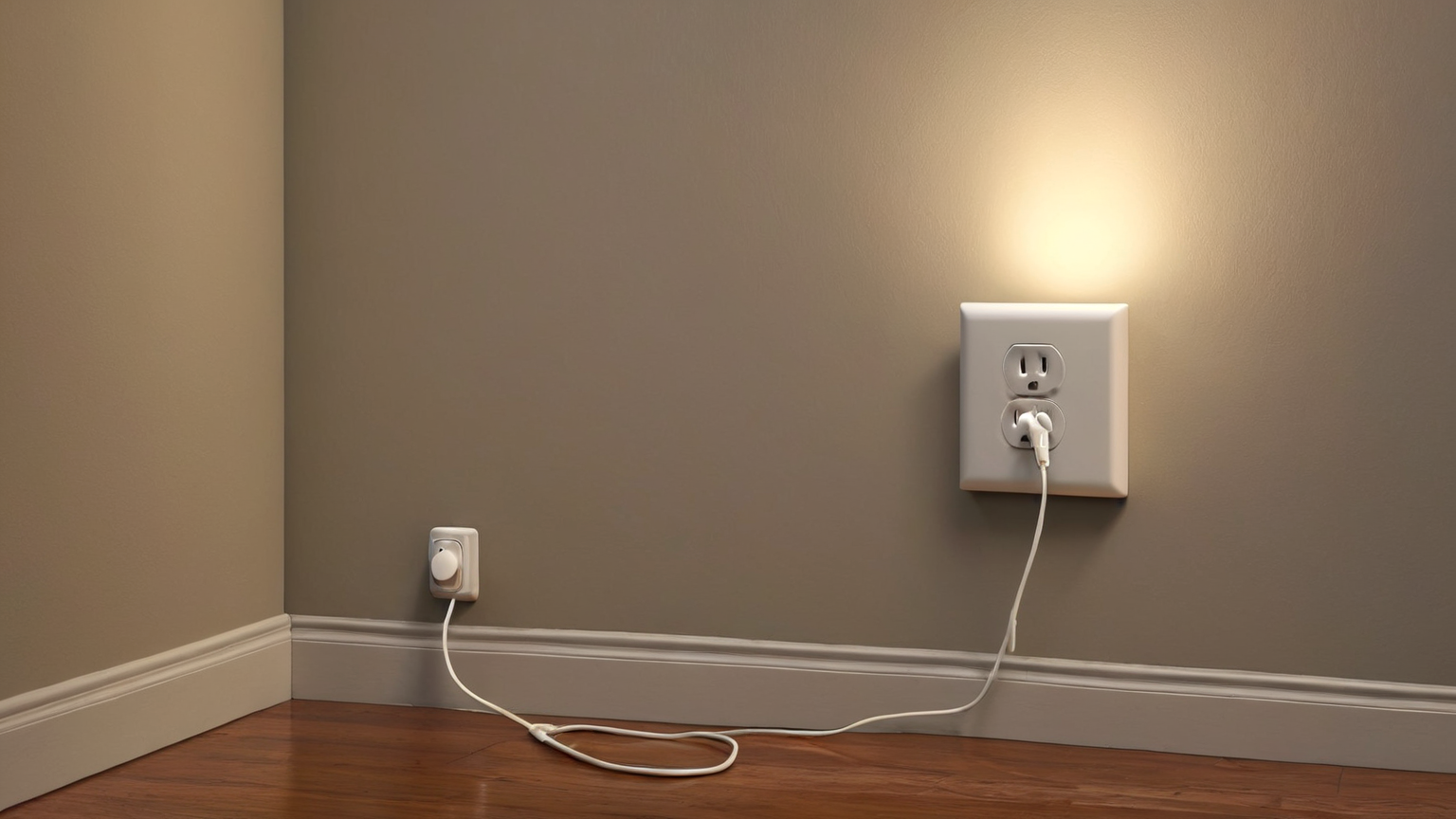
A plug-in light is only rental-friendly if the cord and outlet remain safe. Do not run cords under rugs, through door gaps, or across a walking route. Do not overload a power strip to solve one lighting problem. If an outlet is loose, warm, cracked, or sparking, stop using it and notify the property owner or a qualified electrician through the proper channel.
No-drill placement checklist
- Put the first light at the first decision point, not at the prettiest wall.
- Keep shoes, baskets, and pet items outside the walking lane.
- Use one visual cue for the bathroom or exit door.
- Test from both directions.
- Recheck after laundry day, grocery day, and guest visits.
- Keep emergency lighting separate from decorative mood lighting.
Small-space design that does not create a hazard
A console table, plant stand, or storage cube can make a hallway look finished but still narrow the escape path. If furniture forces people to turn sideways, it belongs somewhere else. In rentals, the most elegant solution is often subtraction: fewer shoes on the floor, one shallower basket, a flat rug or no rug, and a light that makes the path obvious without demanding attention.
Emergency and roommate checks
Ask a roommate, older family member, or frequent guest to walk the route. They may notice a glare angle or toe-catching edge you have stopped seeing. Then verify that the entry door opens fully, the flashlight is reachable, and the route works during a power outage. Rechargeable lights should be charged on a schedule, not only after they fail.
When to stop and ask the landlord
Stop if a fixture needs wiring, an outlet looks damaged, a smoke alarm or sprinkler path would be blocked, or the hallway is part of a required building exit. A night-light project should never hide a maintenance problem or create a lease violation. Keep photos of the before-and-after layout if you need to explain that the change is removable.
AdSense and trust note
This guide is intentionally practical rather than product-driven. It does not recommend one brand, does not ask readers to bypass safety instructions, and keeps irreversible electrical, lease, academic, or health decisions with the qualified owner, instructor, landlord, or professional who has the full context. Use it as a planning worksheet, not as a substitute for local rules or official instructions.
Quick summary
- Start with the lowest-risk physical check before changing apps or buying gear.
- Record the current condition, one reversible change, and the result.
- Keep emergency, safety, privacy, and integrity boundaries stricter than convenience settings.
- Recheck after real use, not only during a perfect test.